
St. Columba's Church, Kells
Early Origins and Monastic Importance
St. Columba’s Church holds one of County Meath’s most historically charged ecclesiastical locations, the location of Kells’ early monastery. The monastery was established in the early Middle Ages when Ireland’s High King donated St. Columba the fort of Kells upon which to build a religious community. It was Ireland’s principal Columban monastery.
The first church on this site was completed by 814, and in 878 the relics of St. Columba were brought from Iona. Kells town itself suffered Viking raids in 919, 950, and 969, and other conflicts in the 11th century. The most famous artifact associated with the community is the Book of Kells, an elaborately decorated Latin copy of the four Gospels, written around the year 800. It is still debated whether it was written in whole or part at Kells.
Diocesan Status and Medieval Decline
In 1152, following the Synod of Kells, the town was elevated to diocesan status, and the church became a cathedral for the diocese. However, in the early 13th century, the Diocese of Kells was incorporated into the newly created Diocese of Meath.
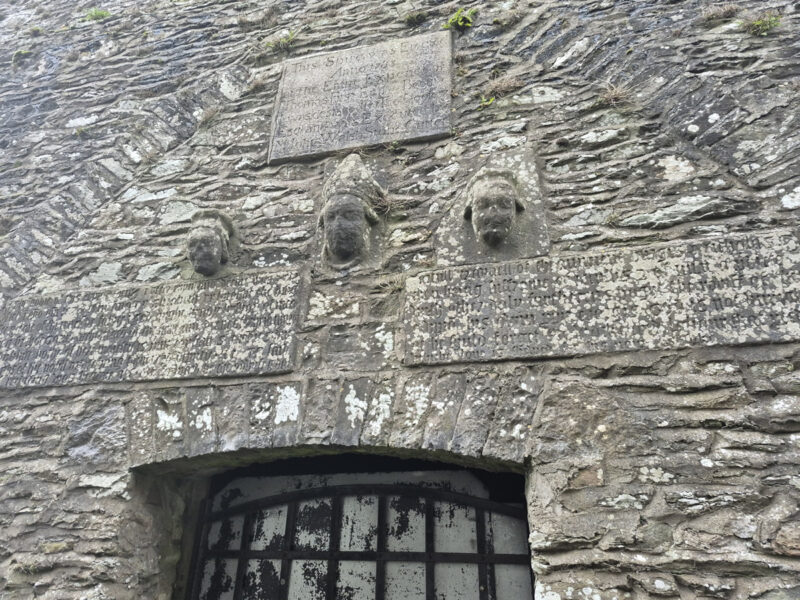
After the Protestant Reformation, the church fell into disrepair. It was repaired in 1578 by Hugh Brady, Bishop of Meath, with the help of Sir Thomas Garvie and Nicholas Daly, Sovereign of Kells. The sole surviving part of the medieval church is the bell tower, a great cruciform building with a chancel and tower. Several medieval high crosses also survive in the graveyard.
18th Century Rebuild and Afterwards Changes
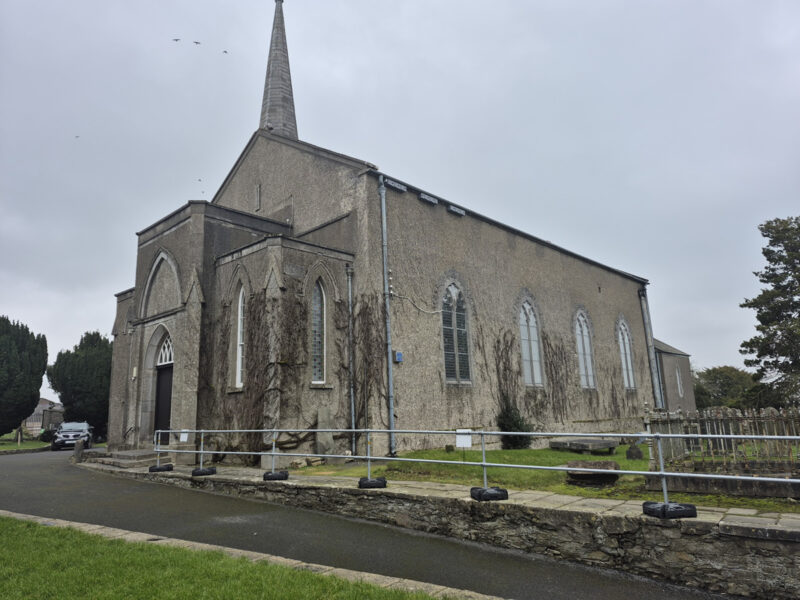
In 1778, the then-existing St. Columba’s Church was erected by Thomas Cooley. A spire on the bell tower was added in 1783 by Thomas, 1st Earl of Bective. This work’s stone-cutter was John Walsh, and the piers of graveyard gates were constructed for the Earl simultaneously.
1811: The church was altered.
1858: The interior was reorganized, possibly at the request of architect Joseph Welland.
1965: The roof was restored, and the interior was refurnished.
Architectural Features
The church is a separate gable-fronted structure with four-bay nave and single-bay chancel, augmented by projecting entrance bays. It has a pitched slate roof, roughcast rendered and squared limestone walls, and sash lancet windows with hood mouldings. The interior is full of Gothic detail with fine Victorian stained glass windows and the marble Taylour monument commemorating Sir Thomas Taylour, an Irish politician and peer.
The 11th-century round tower on the site was an invasion refuge for monks. St. Colmcille’s House, nearby, is among the few early medieval houses left.
Modern Use and Significance
St. Columba’s Church is one of Kells’ main historical and architectural points of interest among history enthusiasts and fans of ecclesiastical architecture. The gallery, refurbished to become an exhibition room in 1965, contains historic information on the site, including a replica of the Book of Kells in the original baptistry. The location features a series of Celtic crosses from the 11th century, raising its cultural and historical value.
Clergy
Rev. William Seale – In office
Address: The Rectory, Mullingar Road, Kells, Co. Meath.
Phone: 046-9293626
E-mail: waseale@btinternet.com
The church is open to visitors on Mondays to Saturdays throughout the summer months, providing a rich experience to those interested in Irish history and medieval monastic heritage.