
Land Charters & a Notorious King: The Book of Kells as a Real-Estate Register

Did you know that the Book of Kells isn’t just a beautifully illuminated manuscript? It also preserves a fascinating piece of Irish history. In the blank pages of this iconic gospel book, handwritten land
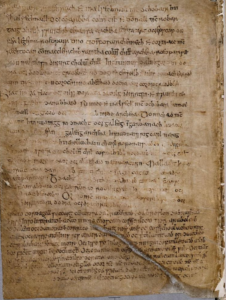
charters from the 11th and early 12th centuries were recorded. Far from being seen as literary vandalism, this practice was considered an act of permanence. These charters offer a rare glimpse into the world of charter-writing in pre-Norman Ireland, documenting land grants and purchases linked to the monastery of Kells between 1033 and 1161.
By inscribing land deals in the Book of Kells, these transactions were granted “the permanency of divine sanction,” as one scholar put it. It also reflects a medieval mindset that saw blank spaces in books as communal noticeboards, making no fewer than twelve such additions in the manuscript now preserved at Trinity College Dublin.
A Secularised Monastery and a Thriving Community
These records reveal that the monastery of Kells was not only a religious hub but also a significant secularised community, typical of the period just before the major reform of the Irish church in the 12th century. The monastery was:
- Endowed with land across Ireland and managed by various officials, including the:
- Fer leiginn (head of the monastic school)
- Airchinnech (head of the guest-house)
- Toisech na scoloc (steward of the monastic farm tenants)
- A bustling community where many were engaged in education and highly artistic craftwork, not just agriculture.
Economic Activity and Urban Development
The charters also mention the margad Cenanndsa (market of Kells), highlighting the monastery’s role as a thriving economic hub. This market likely evolved from a fair called the oenach, held on major feast days. One charter even records the sale of cattle in this market. Additionally, there are references to:
- Granaries and property transactions, indicating a vibrant local economy.
- A clochán (likely a stone causeway) leading to a granary, offering the only written clue about a street layout.
- Siofoic, an area in or near the monastic enclosure, possibly linked to the present-day Suffolk Street.
A Glimpse Into a Proto-Town
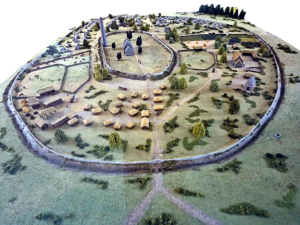
Based on these charters, we learn that Kells, during the 11th and 12th centuries, functioned as an early version of a town with residents who were part of the clergy and laity, free individuals, and outsiders. Although there are no archaeological clues about the town’s layout, these documents suggest that it could have been a complex settlement with some level of organisation, including:
- Wooden houses with thatched roofs, vulnerable to fire and Viking attacks.
- A report from after A.D. 951 indicating that Kells was significantly wealthier and more important at that time.
These hidden charters transform the Book of Kells from just a religious book into a one-of-a-kind historical record offering insights into medieval Irish society, economy, and urban development.
Tigernán Ua Ruairc, King of Bréifne

Among the most intriguing entries is a substantial land grant by Tigernán Ua Ruairc, King of Bréifne. Ruling for an extraordinary 50 years (c. 1122–1172), Ua Ruairc was known as a shrewd political operator – even switching political allegiances “approximately 16 times” amidst the turbulent feuds of 12th-century Ireland. This Cavan king’s reputation is famously intertwined with the story of the English invasion of Ireland, following the abduction of his wife, Derbforgaill. Yet, his strategic acumen in building his kingdom is often overlooked.
One particular transaction recorded in the Book of Kells reveals his grant of a vast expanse of land in modern Co. Meath, stretching from Dulane to Slane, as “a perpetual alienation to God and to Columcille from himself and from every king that shall take Bréifne for ever.” Piety may have been a motive, but so was political pragmatism.
By gifting this territory to the church, Ua Ruairc safeguarded it from falling into the hands of rivals. As one historian notes, “the magnanimity of a dynasty that is rapidly losing power” often surfaces in such strategic donations.
Ua Ruairc’s grant illustrates how medieval Irish kings leveraged land to secure political and military advantage while also demonstrating piety. In his case, this shrewd move was immortalised in the margins of the Book of Kells – a remarkable blend of sacred art and secular power play.